History Of UFH
.png/:/cr=t:0%25,l:0%25,w:93.75%25,h:100%25/rs=w:400,h:533.3333333333334,cg:true)
From Early concepts
Underfloor heating has been around far longer than most people realise. Its earliest known origins trace back to the Roman hypocaust system, where hot air from a furnace was channelled beneath raised floors and through wall flues to heat baths and important buildings. This was an advanced solution for its time and laid the foundations for the heating principles still used today.
Over the centuries, heating systems evolved from crude masonry channels and solid-fuel heat sources into more controlled radiant systems. The real modern development of underfloor heating came with advances in insulation, pipe technology, electric heating elements, and temperature controls, allowing heat to be delivered more efficiently, evenly, and safely throughout a building.
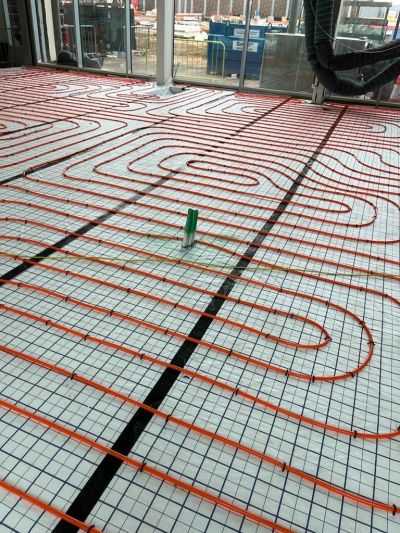
Today, underfloor heating is a highly effective solution for both domestic and commercial spaces, offering improved comfort, lower visible clutter, and excellent compatibility with modern construction methods. At Tekwarm, we continue that evolution by supplying systems designed for performance, efficiency, and practical installation in today’s buildings.
The Main Concepts of Modern UFH
At its core, underfloor heating is built around a few straightforward principles:
- Even heat distribution across the floor area
- Lower operating temperatures than traditional radiator systems
- Improved comfort, with warmth rising gently from the floor upward
- Greater design freedom, with less reliance on visible emitters such as radiators
- Compatibility with modern insulation levels and efficient heat sources
These benefits have helped shift UFH from being viewed as a premium or specialist option into a much more mainstream heating solution.
Market Growth and Wider Adoption
Over the last few decades, the underfloor heating market has grown significantly. What was once largely specified for high-end projects or specialist commercial applications is now common across new-build housing, extensions, renovations, apartments, schools, offices and modular construction. Growth has been driven by better materials, easier installation methods, improved controls, tighter building standards, and the wider push for energy-efficient heating systems.
Another major factor has been the rise of the DIY and light-renovation market. Simpler installation systems, pre-routed boards, easier controls and more accessible product knowledge have made UFH increasingly attractive not only to professional installers, but also to competent renovators and homeowners looking to improve comfort and efficiency. In short, the market has broadened massively — from specialist trade-only territory to a solution that is now far more visible and understood across the wider construction and home-improvement space. This broader accessibility is also reflected in the availability of electric systems designed for refurbishment and floor-finish-specific applications.
The Role of Electric Underfloor Heating
Alongside wet systems, electric underfloor heating has also played an important role in the development of the sector. While typically used more in smaller spaces, retrofit projects, bathrooms, kitchens and refurbishment schemes, electric UFH has helped introduce more customers to the comfort and convenience of floor heating. It remains an important part of the market, particularly where build-up height, installation speed or individual room upgrades are key considerations.
Underfloor Heating Today
Today, UFH is no longer a niche concept. It is a well-established, high-performance heating solution that fits perfectly with the direction of modern construction: better comfort, better efficiency, better control and better integration with low-carbon technologies. From Roman stone floors to advanced pipe systems, smart controls and modern heating design, underfloor heating has come a long way — and its growth is still very much ongoing.
At Tekwarm, we are part of that continuing progression, supplying underfloor heating solutions designed to meet the needs of modern homes, commercial spaces and evolving building methods.